You think you're ready.
But do you actually know?
Most students walk into placements not knowing what they don't know. Not lazy, just never told. There's a difference between finishing college and being ready for a job. This is how you find out which side you're on.
100% Human-Led Assessments
You will be evaluated by active industry professionals. No automated AI bots, no generic questionnaires.
The honest questions
The things most students haven't stopped to ask themselves. Not questions about your CGPA. Questions about what actually happens when you sit across from someone who's been hiring engineers for decades and they start asking things your professors never covered.
Memorizing textbooks is one thing. Being able to defend your technical decisions, explain complex concepts simply, and handle follow-up questions from senior engineers without faltering is what actually gets you hired.
Hope is not a strategy. The best candidates understand their own gaps and know how to address them honestly, rather than praying the interviewer stays within their comfort zone.
Real-world problems don't come neatly packaged like exam papers. We test your ability to adapt, think on your feet, and navigate ambiguity when the standard script is thrown out the window.
Hiring managers hear the same robotic answers hundreds of times. You need to craft a compelling, authentic narrative that actually sets you apart from the sea of identical candidates.
A degree gets you in the door; your presence gets you the job. We evaluate your communication, confidence, and whether you present yourself as a future asset or just another applicant.
Why this gap exists
It's not your fault. But it is your problem to fix.
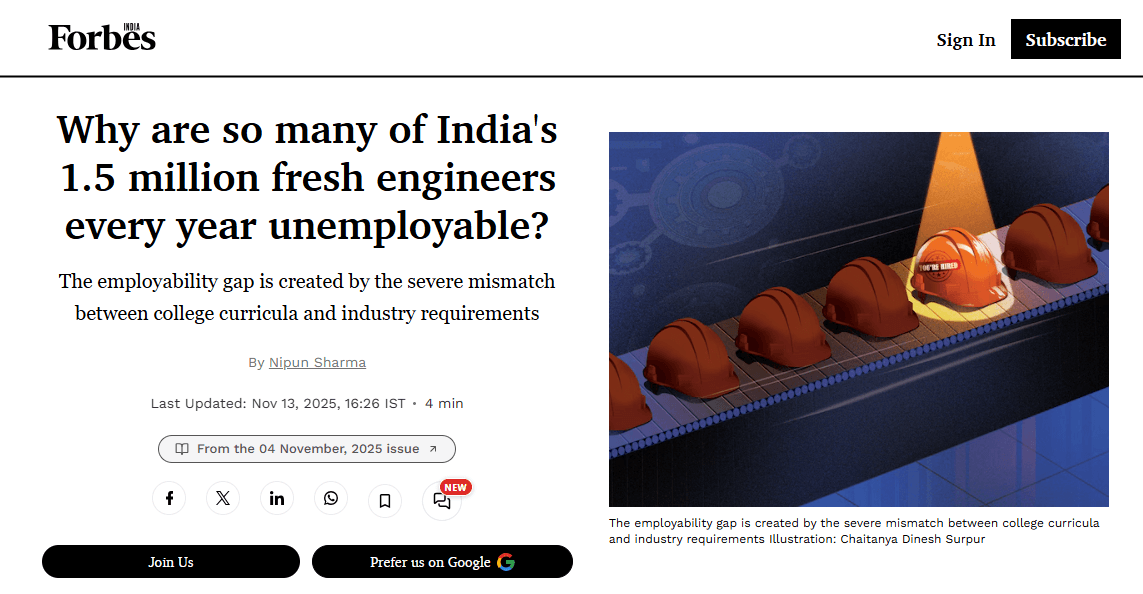
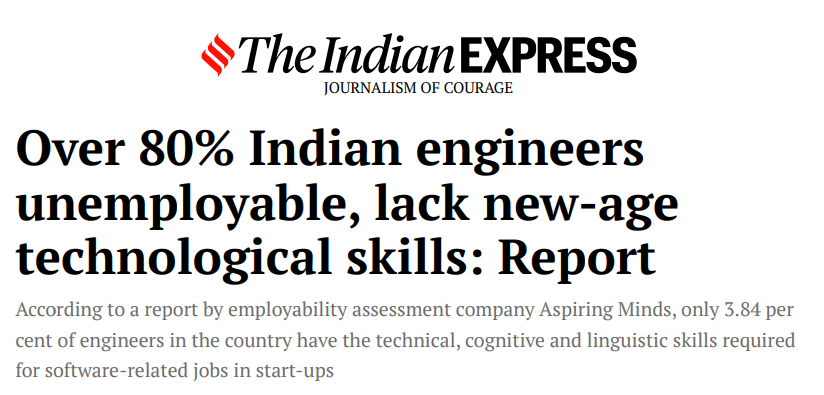
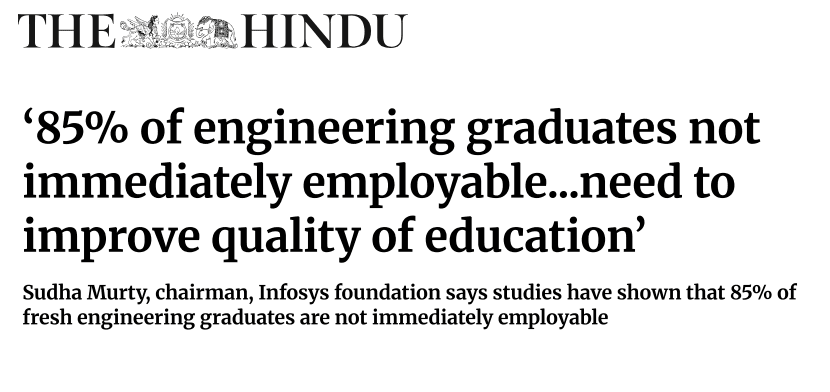
College teaches you to pass exams. Companies need you to solve real problems, communicate clearly, and handle pressure. Nobody told you those were different skills, and nobody gave you a way to practice the second set.
What college tested
Can you recall the right answer?
Theory, formulas, multiple choice, rote problems with known solutions.
What interviews test
Can you think when you don't know?
Applied reasoning, communication under pressure, self-awareness.
What you were told to prepare
DSA, CGPA, projects.
All useful. But not the whole picture, and often not even the deciding factor.
What most students miss
How they come across.
Confidence, clarity, composure. These are the soft factors that quietly decide close calls.
What actually happens
30 minutes. No sugarcoating. No generic advice.
You sit with someone who has spent 32 years in IT, from hands-on technical work up to managing large-scale programmes, and the last three years interviewing students from IITs and top colleges across India.
This isn't a mock interview for practice. It's a real assessment. You'll be pushed. That's the point, because that's exactly what the actual interview will do.
HR & employer questions
The questions most students think are easy, "tell me about yourself", "where do you see yourself in 5 years", asked the way real interviewers ask them. How you handle this half tells as much as your technical answers.
Technical deep-dive
Not from a fixed question bank. Your actual domain, your stated skills, tested directly. You'll know quickly whether what you think you know holds up under questioning.
Your written feedback report
A structured report arrives within one day. Four areas scored and commented on, so you know exactly what to work on, not just that "you need to improve."
Your feedback report covers
Four areas. Written down. Specific to you.
Not a score out of ten. Actual observations, what you did well, what you didn't, and what to do about it.
Technical accuracy
Do you actually know what you say you know? Where did you hold up, and where did the gaps show?
Communication clarity
Could you explain your thinking clearly? Did you ramble, go blank, or get to the point?
Stress handling
When pushed on something unfamiliar, did you recover, or did it visibly rattle you?
HR response quality
Did your answers to people-questions help your case, or quietly work against you?
Along with the feedback, you'll get a personalised roadmap, specific tools, certifications, projects, and practice areas to close the gaps that actually showed up in your session.
What happens to the session stays with you.
Some students hesitate because they're worried someone from their college will find out they needed help, or that recordings will circulate. Neither will happen.
Your session is completely confidential.
We do not record or share your interview footage without your explicit consent. Your feedback report is yours, share it with whoever you want, or keep it to yourself. No one outside this session will know what was discussed.